
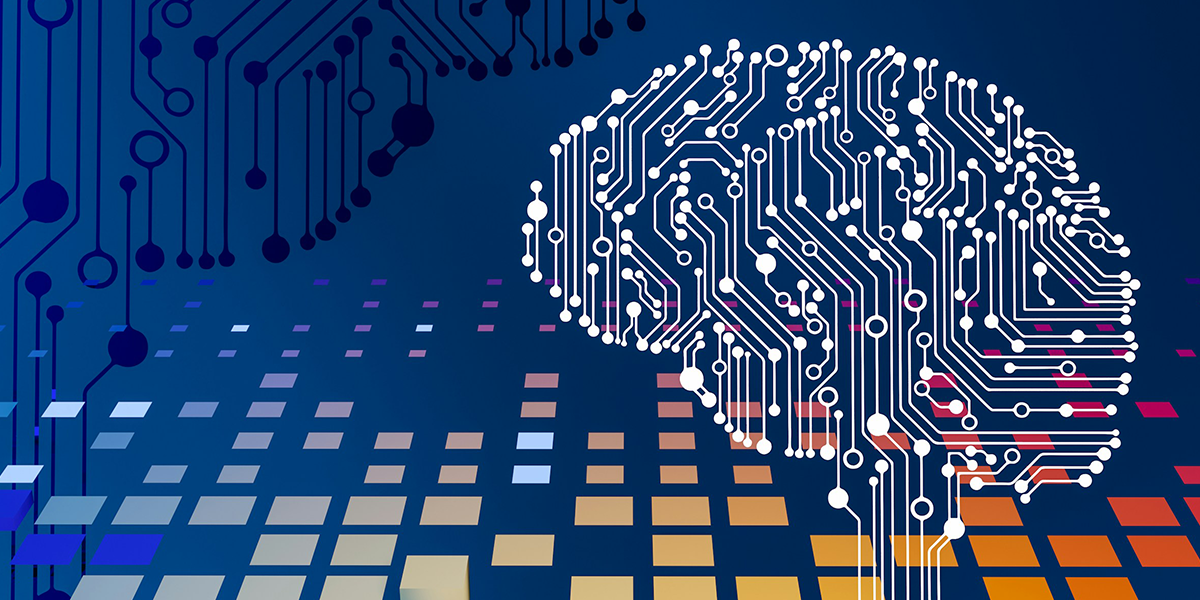
Machine Learning 2026: Algorithms, Applications, and Future Trends
You hear about machine learning everywhere. Your email spam filter uses it. Netflix recommends movies with it. Your bank detects fraud using it. But when someone asks you what machine learning actually is, you freeze. You know it involves algorithms and data. But the details feel overwhelming.
I have been working in machine learning for over eight years. I have built models for Fortune 500 companies. I have taught ML to hundreds of students. The field has changed dramatically. What was cutting-edge in 2020 is now standard. New techniques have emerged. The hype has cooled. Real applications are everywhere.
This is your complete guide to Machine Learning 2026. Inside, you will discover the most important algorithms driving modern AI, real-world applications across every industry, and the future trends that will shape the next five years. No complex math. No intimidating code. Just clear explanations from someone who uses these tools every day.
What You Will Learn Inside
- 1. Core Machine Learning Algorithms in 2026
- 2. Supervised Learning: Predicting Outcomes
- 3. Unsupervised Learning: Finding Patterns
- 4. Reinforcement Learning: Learning from Actions
- 5. Deep Learning and Neural Networks
- 6. Real-World Applications of Machine Learning
- 7. Future Trends in Machine Learning
- 8. Frequently Asked Questions
- 9. Final Thoughts and Your Next Move
1. Core Machine Learning Algorithms in 2026
Machine learning algorithms have matured. Some have become industry standards. Others have faded away. Here are the ones you need to know.
What Makes an Algorithm Popular
Not all algorithms are created equal. The most popular algorithms share three traits. They are efficient, meaning they train quickly and use reasonable memory. They are accurate, meaning they make correct predictions consistently. They are interpretable, meaning humans can understand why they made a decision.
The trade-off between accuracy and interpretability is real. Simple algorithms like linear regression are easy to explain but less accurate on complex problems. Deep neural networks are very accurate but difficult to interpret. The right choice depends on your use case.
In regulated industries like finance and healthcare, interpretability is critical. Regulators want to know why a loan was denied or a diagnosis was made. In consumer applications like recommendations, accuracy matters more.
Most Used Algorithms in 2026
According to Kaggle surveys and industry reports, these are the most widely used algorithms in 2026:
- Gradient Boosted Trees – Used for tabular data, finance, and insurance. XGBoost, LightGBM, and CatBoost are the leading implementations.
- Random Forests – An ensemble method that combines many decision trees. Robust and interpretable.
- Neural Networks – Used for images, text, audio, and video. Deep learning dominates these domains.
- Linear and Logistic Regression – Still widely used for baseline models and when interpretability is critical.
- K-Means Clustering – The standard for customer segmentation and pattern discovery.
2. Supervised Learning: Predicting Outcomes
Supervised learning is the most common type of machine learning. You provide labeled examples. The algorithm learns to predict labels for new data.
Regression: Predicting Numbers
Regression predicts continuous values. House prices, temperatures, sales forecasts, and stock prices are all regression problems. The output is a number, not a category.
Linear regression is the simplest form. It draws a straight line through your data points. Despite its simplicity, linear regression works well for many problems. It is also highly interpretable. You can see exactly how each input affects the output.
More complex regression methods include polynomial regression, decision trees for regression, and neural networks. These capture non-linear relationships that linear regression misses. The trade-off is interpretability.
Classification: Predicting Categories
Classification predicts discrete categories. Is this email spam or not? Is this tumor malignant or benign? Will this customer churn or stay? The output is a class label.
Binary classification has two possible outputs. Yes or no. True or false. Spam or not spam. Most classification problems are binary. Multi-class classification has three or more possible outputs. Recognizing handwritten digits (0-9) is a multi-class problem.
Popular classification algorithms include logistic regression, decision trees, random forests, gradient boosted trees, and support vector machines. Neural networks excel at complex classification like image recognition.
Training and Evaluation
You cannot use all your data for training. You need to hold some back to evaluate performance. The standard split is 80 percent training, 20 percent testing. The algorithm never sees the test data until final evaluation.
Cross-validation is a more robust evaluation method. You split your data into k groups. You train on k-1 groups and test on the remaining group. You repeat this k times. This gives you a more reliable estimate of performance.
Common evaluation metrics include accuracy, precision, recall, F1 score, and area under the ROC curve. The right metric depends on your problem. For imbalanced datasets, accuracy can be misleading. Precision and recall are more informative.
3. Unsupervised Learning: Finding Patterns
Unsupervised learning finds patterns in unlabeled data. You do not provide examples. The algorithm discovers structure on its own.
Clustering: Grouping Similar Items
Clustering finds groups of similar items. Customer segmentation, document organization, and image compression all use clustering. The algorithm does not know what the groups represent. It just finds natural groupings.
K-means is the most popular clustering algorithm. You specify the number of clusters. The algorithm assigns each data point to the nearest cluster center. It then recalculates cluster centers. It repeats until convergence.
Choosing the right number of clusters is tricky. The elbow method plots within-cluster sum of squares against number of clusters. The "elbow" where the curve bends is usually the right number. Domain knowledge also helps.
Other clustering algorithms include hierarchical clustering, DBSCAN, and Gaussian mixture models. Hierarchical clustering builds a tree of clusters. DBSCAN finds clusters of arbitrary shape. Gaussian mixture models assign probabilities of cluster membership.
Dimensionality Reduction: Simplifying Data
High-dimensional data is hard to visualize and analyze. Dimensionality reduction projects data into fewer dimensions while preserving structure.
Principal Component Analysis is the standard. PCA finds the directions of maximum variance in your data. It projects data onto these principal components. The first few components capture most of the variance.
PCA is useful for visualization, noise reduction, and speeding up other algorithms. You can reduce 1,000 dimensions to 50 and lose only 10 percent of the information. The trade-off is interpretability. Principal components are combinations of original features. They can be hard to explain.
t-SNE and UMAP are non-linear dimensionality reduction techniques. They are excellent for visualization but do not produce a transformation you can apply to new data. Use them for exploration, not production.
4. Reinforcement Learning: Learning from Actions
Reinforcement learning is different from supervised and unsupervised learning. An agent learns by taking actions and receiving rewards. It explores the environment. It exploits what it has learned. It improves over time.
How Reinforcement Learning Works
The reinforcement learning loop has five components. The agent takes an action. The environment updates its state. The agent receives a reward. The agent updates its policy. The loop repeats.
The goal is to maximize cumulative reward. The agent must balance exploration (trying new actions) with exploitation (taking known good actions). Too much exploration leads to low rewards. Too much exploitation leads to missing better strategies.
Q-learning is the foundational algorithm. It learns the value of taking an action in a given state. Deep Q-Networks use neural networks to approximate Q-values for complex problems. DQN famously learned to play Atari games better than humans.
Applications of Reinforcement Learning
Reinforcement learning has achieved superhuman performance in games. AlphaGo beat the world champion at Go. AlphaZero mastered chess, shogi, and Go with no human knowledge. OpenAI Five beat professional Dota 2 teams.
Robotics uses reinforcement learning for motor control. Robots learn to walk, grasp, and manipulate objects through trial and error. Sim-to-real transfer trains robots in simulation then deploys them in the real world.
Autonomous vehicles use reinforcement learning for decision-making. When to change lanes? How fast to drive? When to brake? Reinforcement learning helps vehicles navigate complex traffic situations.
Recommendation systems increasingly use reinforcement learning. Instead of predicting clicks, they optimize for long-term engagement. The agent learns which recommendations keep users coming back.
5. Deep Learning and Neural Networks
Deep learning uses neural networks with many layers. These models have revolutionized computer vision, natural language processing, and speech recognition.
How Neural Networks Work
A neural network consists of layers of neurons. Each neuron receives inputs, multiplies them by weights, sums them, and applies an activation function. The output passes to the next layer.
The input layer receives your data. Hidden layers transform the data. The output layer produces predictions. Deep networks have many hidden layers. The "deep" in deep learning refers to these many layers.
Training uses backpropagation. The network makes a prediction. The loss function measures how wrong it was. The algorithm adjusts weights to reduce the loss. It repeats for millions of iterations. The network slowly learns.
Convolutional Neural Networks for Images
Convolutional neural networks are designed for image data. They use convolution filters to detect edges, shapes, and objects. The filters learn what to detect during training.
Early layers detect simple features like edges and colors. Middle layers detect shapes like circles and corners. Late layers detect objects like faces and cars. This hierarchical learning is the power of deep learning.
CNNs are used for image classification, object detection, image segmentation, and facial recognition. ResNet, EfficientNet, and ConvNeXt are state-of-the-art architectures.
Transformers for Text and Beyond
The transformer architecture has revolutionized natural language processing. Transformers use self-attention to understand relationships between words. They process all words in parallel, unlike recurrent networks that process sequentially.
BERT, GPT, and their successors are all transformers. They have achieved human-level performance on many language tasks. Question answering, text summarization, translation, and sentiment analysis are all transformer domains.
Transformers have also been applied outside NLP. Vision transformers compete with CNNs for image tasks. Music transformers generate original compositions. Protein folding transformers predict 3D structures from amino acid sequences.
6. Real-World Applications of Machine Learning
Machine learning is not just a research field. It powers products you use every day.
E-commerce and Retail
Amazon's recommendation engine drives 35 percent of sales. The system uses collaborative filtering and deep learning to predict what you want. It learns from your purchases, views, and searches. It also learns from similar customers.
Dynamic pricing adjusts prices based on demand, competitor prices, and inventory. Airlines, hotels, and ride-sharing companies use reinforcement learning to set optimal prices. The goal is to maximize revenue while keeping customers satisfied.
Inventory forecasting predicts demand for millions of products. The system orders stock before it runs out. It prevents overstocking and understocking. This saves retailers billions of dollars annually.
Healthcare and Medicine
Radiology AI detects cancer in medical images. The systems match or exceed human radiologists for some conditions. They work 24/7 and never get tired. They prioritize urgent cases for human review.
Drug discovery uses machine learning to predict which molecules will work as drugs. The system screens millions of candidates in silico. Only the most promising go to lab testing. This cuts years off the development timeline.
Personalized medicine predicts which treatments will work for which patients. The system learns from genetic data, medical history, and treatment outcomes. It recommends therapies with the highest probability of success.
Finance and Banking
Fraud detection flags suspicious transactions in real time. The system learns normal behavior for each customer. It alerts when transactions deviate from normal. It blocks transactions when fraud is likely.
Credit scoring predicts the risk of lending to a borrower. Traditional credit scores use limited data. Machine learning models incorporate thousands of variables. They are more accurate and fair when designed properly.
Algorithmic trading executes trades based on market conditions. The systems react faster than humans. They can exploit tiny price differences across exchanges. They provide liquidity to markets.
Transportation and Logistics
Route optimization finds the fastest path for deliveries. The system considers traffic, weather, and delivery windows. It adapts in real time as conditions change. This saves fuel and time.
Autonomous vehicles use multiple machine learning systems. Object detection identifies cars, pedestrians, and obstacles. Path planning chooses the safe route. Control sends commands to steering, brakes, and accelerator.
Predictive maintenance alerts when equipment is about to fail. The system monitors sensors on planes, trains, and factory machines. It schedules repairs before breakdowns occur. This prevents costly downtime.
7. Future Trends in Machine Learning
Machine learning continues to evolve rapidly. These trends will shape the next five years.
Large Language Models
Large language models like GPT-5 and Gemini 2.0 have transformed NLP. They are trained on massive text datasets. They can generate text, answer questions, summarize documents, and write code.
The trend is toward larger models trained on more data. But the marginal returns are diminishing. The next frontier is efficiency. Smaller models trained on higher quality data can match the performance of larger models.
Multimodal models combine text, images, audio, and video. They understand the world more completely than single-modality models. Gemini and GPT-5 are already multimodal. Expect more powerful multimodal models soon.
Generative AI
Generative AI creates new content. Text, images, music, and video can all be generated. DALL-E, Midjourney, and Stable Diffusion generate images from text descriptions. MusicLM generates music. Runway generates video.
Generative AI raises copyright and ethical questions. Who owns AI-generated content? What if the model reproduces copyrighted material? How do we detect deepfakes? These questions are unresolved. Laws and norms will evolve.
Controllable generation is the next frontier. Instead of generating random content, users will specify attributes. "Generate a happy song in the style of Taylor Swift." "Generate a photo of a cat sitting on a couch, wearing a red hat, with natural lighting." Control will improve.
Edge AI and TinyML
Most machine learning runs in the cloud. Data is sent to servers, processed, and results are returned. This works but has latency, privacy, and bandwidth issues.
Edge AI runs models on devices. Your phone, smart speaker, or car runs the model locally. This is faster and more private. No data leaves your device. The trade-off is compute power.
TinyML runs models on microcontrollers. These are tiny, low-power chips. They cost pennies and run on batteries for years. TinyML enables smart sensors that detect anomalies, classify sounds, and recognize gestures. The applications are endless.
Responsible AI
Machine learning can perpetuate and amplify human biases. A hiring algorithm might discriminate against women. A credit scoring model might discriminate against minorities. A facial recognition system might work poorly on dark skin.
Responsible AI is the field of making machine learning fair, accountable, and transparent. Fairness metrics measure discrimination. Explainability methods explain why models make decisions. Auditing processes catch problems before deployment.
Regulation is coming. The EU AI Act is already law. US regulation is likely within a few years. Companies that ignore responsible AI will face legal and reputational consequences.
Frequently Asked Questions
What is the difference between AI and machine learning?
Artificial intelligence is the broad field of making machines intelligent. Machine learning is a subset of AI that learns from data without being explicitly programmed. All machine learning is AI, but not all AI is machine learning. Symbolic AI, expert systems, and planning are AI without machine learning.
Do I need a PhD to work in machine learning?
No. Many successful ML engineers and data scientists do not have PhDs. A strong portfolio of projects matters more than credentials. Online courses, bootcamps, and self-study can prepare you for entry-level roles. Advanced research roles still require advanced degrees.
How much data do I need to train a model?
It depends on the problem and algorithm. Simple models can train on hundreds of examples. Deep learning often requires thousands or millions. Transfer learning reduces data requirements. Start with available data. Collect more if performance is insufficient.
What programming language should I learn for ML?
Python is the standard. It has the best libraries: NumPy, pandas, scikit-learn, PyTorch, and TensorFlow. R is used in academia and statistics. SQL is essential for data access. Learn Python first. Add SQL and R as needed.
Will machine learning take my job?
Machine learning will automate tasks, not entire jobs. Repetitive, predictable tasks are most at risk. Creative, strategic, and interpersonal tasks are least at risk. Workers who learn to use ML tools will be more productive. Workers who ignore ML will fall behind.
Final Thoughts and Your Next Move
Machine learning has moved from research labs to everyday products. The algorithms are mature. The tools are accessible. The applications are everywhere. Understanding the basics helps you make better decisions, whether you are building products, investing in companies, or just using the technology.
Your next move depends on your goals. If you want to build ML models, start with Python and scikit-learn. Take Andrew Ng's Machine Learning Specialization on Coursera. Build projects. Share them on GitHub. Apply for jobs.
If you want to use ML in your business, start with a small pilot. Identify a repetitive task that could be automated. Collect data. Build a simple model. Measure the impact. Expand if successful.
If you just want to understand the technology, you already made progress. Read the news. Follow ML researchers on social media. Take an introductory course. The field moves fast. Stay curious.
Machine learning is not magic. It is math, statistics, and computer science applied to data. Anyone can learn the fundamentals. You just did.
Start Your Machine Learning Journey Today
What is your biggest question about machine learning? Are you trying to learn? Build something? Understand the hype? Drop a comment below. I read every response and answer as many questions as I can.
Share this guide with someone who needs to understand what machine learning really is.







Leave a Comment