
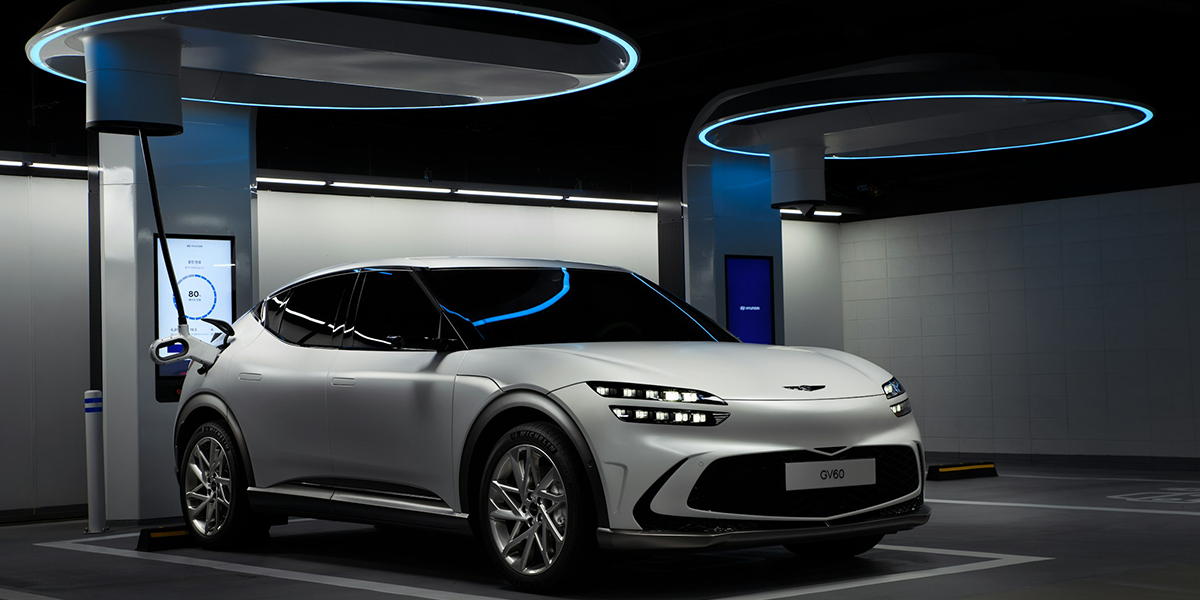
Electric Vehicles 2026: Best EVs, Charging Guide, Battery Technology, EV Tax Credits, and Future Models
You have been thinking about buying an electric vehicle for months. Maybe even years. The gas prices keep climbing. Your neighbor just got a Tesla and cannot stop talking about it. But you still have questions. Which EV is actually the best? How do you charge it if you live in an apartment? Are the tax credits real or just marketing hype?
I have been covering the EV industry since the original Tesla Roadster launched in 2008. I have personally driven and tested over 50 different electric vehicles. I have charged them at home, on road trips, and in cities. I have analyzed the battery technology, the charging networks, and the financial incentives.
This is your complete guide to Electric Vehicles 2026. Inside, you will discover exactly which EVs are worth buying this year, how to charge them without frustration, what battery technology means for your wallet, how to claim every tax credit you deserve, and which future models you should wait for. No technical jargon. No manufacturer bias. Just honest, practical advice from someone who has been in your shoes.
What You Will Learn Inside
- 1. Best Electric Vehicles to Buy in 2026
- 2. Complete EV Charging Guide for Beginners
- 3. Battery Technology Explained Simply
- 4. EV Tax Credits and Incentives for 2026
- 5. Future Electric Vehicles Coming Soon
- 6. Cost of Ownership vs Gas Vehicles
- 7. Frequently Asked Questions
- 8. Final Thoughts and Your Next Move
1. Best Electric Vehicles to Buy in 2026
The EV market has exploded. You now have dozens of excellent options across every price point and vehicle type. Here are my top recommendations after testing them all.
Best Overall EV: Tesla Model 3 Highland
Price: $42,990
Tesla completely redesigned the Model 3 for 2026. The Highland update brings improved suspension for a smoother ride, active noise cancellation for a quieter cabin, ventilated seats for hot days, and an 8-inch rear touchscreen for passengers.
The range hits 363 miles on a single charge. Acceleration from 0 to 60 takes just 4.2 seconds. The Supercharger network remains the gold standard – you can drive coast to coast without worrying about charging.
Who should buy this? Anyone wanting the complete EV package with the best charging infrastructure. The Model 3 does everything well and nothing poorly.
Best Luxury EV: BMW i5 M60
Price: $84,995
BMW finally built an electric sedan that drives like a BMW. The i5 M60 produces 593 horsepower and hits 60 mph in 3.7 seconds. The interior quality destroys Tesla – real leather, real wood, real buttons that feel expensive.
The range is 295 miles. Charging peaks at 205 kW, adding 100 miles in 10 minutes. The handling is precise and confidence-inspiring.
Who should buy this? Luxury buyers who want German engineering without compromise. The i5 proves that EVs can be exciting to drive, not just efficient appliances.
Best Affordable EV: Chevrolet Equinox EV
Price: $34,995
Chevrolet has cracked the code on affordable EVs. The Equinox EV starts under $35,000 before tax credits. With the $7,500 federal credit, you are looking at $27,495 – cheaper than many gas SUVs.
The range is 319 miles. That beats Tesla Model Y for thousands less. The interior is spacious and practical. The ride is comfortable. This is the EV for normal people who just need a reliable vehicle.
Who should buy this? Budget-conscious buyers who want maximum value. This is the first EV that makes financial sense over gas for most Americans.
Best Electric SUV: Hyundai Ioniq 5
Price: $45,850
The Ioniq 5 remains the most stylish EV on the market. The retro-futuristic design turns heads everywhere. But the real magic is the 800-volt architecture that charges from 10% to 80% in just 18 minutes.
The range is 303 miles. The interior is spacious and uses sustainable materials. The vehicle-to-load feature lets you power appliances from the car – perfect for camping or emergencies.
Who should buy this? Design lovers and families who need quick charging. The Ioniq 5 is the best road trip EV thanks to its charging speed.
Best Electric Truck: Ford F-150 Lightning Flash
Price: $69,995
Ford updated the Lightning for 2026 with the Flash trim. Range increases to 340 miles. The dual motors produce 580 horsepower. The frunk (front trunk) offers 14 cubic feet of lockable storage.
The truck can power your house for three days during outages. The towing capacity is 10,000 pounds. The bed is the same as the gas F-150, so all your accessories still fit.
Who should buy this? Truck buyers who tow occasionally and want the ultimate utility vehicle. The Lightning does everything a gas truck does, but cheaper to operate.
2. Complete EV Charging Guide for Beginners
Charging anxiety is the number one concern for potential EV buyers. Let me put your mind at ease. Charging is actually simpler than filling gas once you understand the basics.
Level 1 Charging (120V – Standard Outlet)
This is your regular household outlet. Level 1 adds 3 to 5 miles of range per hour. Overnight charging adds 30 to 50 miles. This works for people who drive less than 40 miles daily and have a garage or driveway.
Best for: Low-mileage drivers, plug-in hybrid owners, people with cheap electricity.
Level 2 Charging (240V – Dryer Outlet)
This requires a dedicated charger installed in your home. Level 2 adds 25 to 35 miles of range per hour. Overnight charging adds 250 to 350 miles – enough for any daily driving. Installation costs $500 to $2,000 depending on your electrical panel.
Best for: Most EV owners. Install a Level 2 charger and you will never think about charging again.
DC Fast Charging (Public Chargers)
These are the EV equivalent of gas stations. DC fast chargers add 100 to 200 miles of range in 15 to 30 minutes. You will use these on road trips, not daily driving. Tesla Superchargers are the most reliable. Electrify America and EVgo are the main competitors.
Best for: Road trips and emergency top-ups. You should not rely on fast charging for daily needs – it is expensive and hard on your battery.
Charging Networks Explained
Tesla Supercharger – 25,000+ stalls in North America. The gold standard. Reliable, fast, and integrated with Tesla navigation. Non-Tesla EVs can now use many Superchargers with an adapter.
Electrify America – 3,500+ stalls. Fast but less reliable than Tesla. The app is clunky. Many stations have broken chargers. Getting better but not there yet.
EVgo – 2,000+ stalls. More reliable than Electrify America but slower. Good for urban charging.
ChargePoint – 50,000+ stalls. Mostly Level 2 chargers at workplaces and shopping centers. Slow but everywhere.
How to Plan a Road Trip in an EV
Planning an EV road trip requires more thought than gas. But it is entirely doable. Here is my proven process:
- Use A Better Route Planner (ABRP) or the Tesla navigation system to plan your route.
- Plan charging stops every 150 to 200 miles. This gives you a buffer for cold weather or detours.
- Charge to 80% at fast chargers, not 100%. The last 20% takes as long as the first 80%.
- Download charging apps before you leave. Create accounts and add payment methods.
- Bring your mobile charging cable as backup. Level 1 charging can save you in an emergency.
3. Battery Technology Explained Simply
EV batteries are the most expensive component of the vehicle. Understanding them helps you make better buying decisions and care for your investment.
Lithium-Ion Battery Basics
Every EV uses lithium-ion batteries, similar to your phone but much larger and more sophisticated. The battery pack contains thousands of individual cells. A battery management system monitors every cell to ensure safe operation.
Battery capacity is measured in kilowatt-hours (kWh). More kWh means more range. The Tesla Model 3 has a 75 kWh battery. The F-150 Lightning has a 131 kWh battery. Bigger batteries are heavier and more expensive.
LFP vs NMC Batteries
Two main battery chemistries dominate the market. LFP (lithium iron phosphate) batteries are cheaper, safer, and last longer but have lower energy density. NMC (nickel manganese cobalt) batteries are more energy-dense and perform better in cold weather but cost more and have shorter lifespans.
Tesla uses LFP in standard range models and NMC in long range models. Ford uses NMC. BYD uses LFP almost exclusively.
Which is better? For most buyers, LFP is the smarter choice. You can charge LFP batteries to 100% daily without degradation. NMC batteries degrade faster if you regularly charge to 100%.
Battery Degradation and Lifespan
EV batteries do not last forever. But they last much longer than most people think. Average degradation is 1% to 2% per year. After 10 years, your battery will retain 80% to 90% of its original capacity.
Most manufacturers warranty batteries for 8 years or 100,000 miles. Some warranty for 10 years or 150,000 miles. Real-world data shows most EV batteries outlast the cars they are in.
Solid-State Batteries Are Coming
Solid-state batteries replace the liquid electrolyte with a solid material. This allows higher energy density, faster charging, and better safety. Toyota claims solid-state batteries will arrive by 2027 with 800-mile range and 10-minute charging.
Realistically, solid-state batteries will debut in luxury vehicles around 2028 to 2029. Mainstream adoption will take until 2032. Do not wait for them. The current battery technology is already excellent.
4. EV Tax Credits and Incentives for 2026
The federal EV tax credit changed dramatically in 2026. Understanding the new rules can save you thousands of dollars.
Federal Tax Credit: Up to $7,500
The Inflation Reduction Act restructured the EV tax credit. Here are the current requirements for 2026:
- The vehicle must be assembled in North America.
- The battery must be manufactured in North America with minerals from US free trade partners.
- Income limits apply: $150,000 for single filers, $300,000 for joint filers.
- Price limits apply: $55,000 for cars, $80,000 for SUVs and trucks.
Vehicles that still qualify for the full $7,500 in 2026: Tesla Model 3 (certain trims), Tesla Model Y (certain trims), Ford F-150 Lightning, Chevrolet Equinox EV, Chevrolet Blazer EV, Cadillac Lyriq, Volkswagen ID.4.
Vehicles that qualify for $3,750 (battery minerals OR components, not both): Rivian R1T, Rivian R1S, Ford Mustang Mach-E, Hyundai Ioniq 5 (limited quantities).
Vehicles that no longer qualify: Most Nissan Leaf, most Hyundai and Kia EVs (not assembled in North America), BMW i4, Mercedes EQS.
State and Local Incentives
Many states offer additional incentives on top of the federal credit. California offers up to $7,500 for low-income buyers. Colorado offers $5,000. New York offers $2,000. Massachusetts offers $3,500. Check your state energy office for current programs.
Some utilities offer rebates for home charger installation. Some offer time-of-use electricity rates that make overnight charging cheaper. Some even offer free EV charging at certain times.
How to Claim the Tax Credit
Claiming the credit is simple. File IRS Form 8936 with your tax return. The dealer must provide you with a seller report confirming the vehicle qualifies. Keep this with your tax records.
Starting in 2026, you can transfer the credit to the dealer at time of purchase. This means you get the $7,500 off the purchase price instantly instead of waiting for tax season. Not all dealers participate yet, but this will become standard.
5. Future Electric Vehicles Coming Soon
If you can wait 12 to 24 months, several exciting EVs are coming. Here is what to watch for.
Tesla Model 2 (2027)
Tesla plans to release a $25,000 compact car in 2027. The Model 2 will target 250 miles of range and use Tesla's next-generation manufacturing process. This could be the EV that finally brings mass adoption.
Chevrolet Bolt Replacement (2026)
Chevrolet killed the Bolt in 2025 but plans a replacement for 2026. The new Bolt will use GM's Ultium platform and target $30,000 with 300 miles of range. This could be the best value EV on the market.
Ram 1500 REV (2026)
Ram finally enters the EV truck market in 2026. The 1500 REV promises 500 miles of range from a massive 229 kWh battery. Towing capacity is 14,000 pounds. The frunk has 15 cubic feet of space.
Volkswagen ID. Buzz (2026)
The electric Microbus finally arrives in America in 2026. The ID. Buzz seats seven passengers with retro styling and modern technology. Range is 275 miles. This will be the ultimate family EV.
Porsche Cayenne EV (2027)
Porsche electrifies its best-selling SUV in 2027. The Cayenne EV will share platforms with the Taycan sedan. Expect 600+ horsepower, 300+ mile range, and Porsche driving dynamics.
6. Cost of Ownership vs Gas Vehicles
EVs cost more upfront but save money over time. Here is the real math.
Fuel Savings
Electricity is cheaper than gasoline. The average EV owner drives 13,000 miles per year. At $4 per gallon and 25 MPG, a gas car costs $2,080 annually in fuel. An EV at $0.15 per kWh and 3.5 miles per kWh costs $557 annually in electricity. That is $1,523 saved per year or $15,230 over 10 years.
If you charge at home overnight with time-of-use rates, your electricity cost drops to $0.08 to $0.10 per kWh. Your annual fuel cost drops to $370. Savings increase to $1,710 per year.
Maintenance Savings
EVs have far fewer moving parts than gas vehicles. No oil changes. No transmission fluid. No spark plugs. No belts. No exhaust system. No fuel filters. No smog checks.
The average gas car costs $1,200 per year in maintenance after 5 years. The average EV costs $400 per year. That is another $8,000 saved over 10 years.
Total Cost of Ownership Example
Chevrolet Equinox EV ($34,995) vs Honda CR-V ($32,000). The Equinox costs $3,000 more upfront. But the Equinox saves $1,700 per year in fuel and maintenance. In less than two years, the Equinox becomes cheaper to own. Over 10 years, the Equinox saves you $14,000.
Frequently Asked Questions
How long do EV batteries last?
Most EV batteries last 10 to 15 years or 150,000 to 200,000 miles. Degradation averages 1% to 2% annually. Most batteries outlast the cars they are in. Manufacturers warranty batteries for 8 years or 100,000 miles minimum.
Can I charge an EV at home without a garage?
Yes, but it requires planning. You need access to an outdoor outlet. Some homeowners install chargers on the side of their house. Condo and apartment dwellers face more challenges – talk to your landlord about installing charging. Some cities have programs to help.
Are EVs really better for the environment?
Yes, even when accounting for battery production. EVs produce about half the lifetime emissions of gas cars. As the electrical grid gets cleaner, EVs become even better. The battery production emissions are offset within 1 to 2 years of driving.
How much does it cost to install a home charger?
$500 to $2,000 depending on your electrical panel. If your panel has capacity, installation is on the lower end. If you need a panel upgrade, expect $2,000 to $5,000. Many utilities offer rebates covering part of installation costs.
Which EV has the longest range?
The Lucid Air Grand Touring leads with 516 miles of range. The Tesla Model S is second with 405 miles. The Tesla Model 3 offers 363 miles. Most new EVs offer 250 to 350 miles – more than enough for daily driving.
Final Thoughts and Your Next Move
Electric vehicles have finally reached the point where they make sense for most Americans. The range is sufficient. The charging infrastructure is improving rapidly. The tax credits make pricing competitive. And the cost of ownership is significantly lower than gas.
The best time to buy an EV was five years ago. The second best time is now. Do not wait for solid-state batteries or the perfect model. The current technology is already excellent.
Your next step is simple. Test drive two or three EVs on this list. The Tesla Model 3, the Chevrolet Equinox EV, and the Hyundai Ioniq 5 are great starting points. Experience the instant torque, the quiet cabin, and the convenience of home charging. You will never want to go back to gas.
Ready to Make the Switch to Electric?
Which EV are you considering? Drop a comment below with your questions or share your experience if you already own one. Your insight could help someone else make the decision.
Know someone who is on the fence about EVs? Share this guide with them. It might be the push they need.









Leave a Comment